
How to Find Investors and Raise Startup Funding in 60 Days

3x founder · Coach to 500+ founders
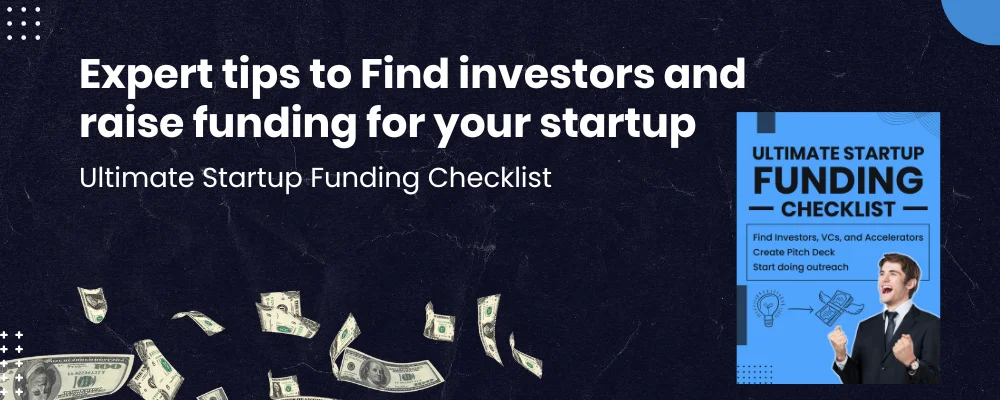
How to find investors and raise funding for your startup
Most founders raise for 9 months. They send 200 emails. They book 12 meetings. They get zero commits.
The version that works is short and aggressive. 60 days of focused outreach. 50 qualified investors. 10 first meetings. One to three term sheets. I used this exact pattern on the Humoniq $8.5M seed at YC S25, where I was the fractional COO.
The process is three steps. None of them are creative. Skip one and the round dies.
Which round are you raising? Get this wrong and the whole list is wrong
Most founders target the wrong investors for six months before they figure this out. Stage mismatch is the fastest way to collect polite rejections without learning anything.
Pre-seed is a bet on the founder in the market. Check sizes run $25K to $500K. You don’t need revenue. You need a credible thesis, a founding team the investor believes in, and a market they think is worth chasing. The question the investor is answering: “Is this the right person, for this problem, right now?”
Traction at pre-seed helps but it is not the gate. When we raised the Humoniq round at YC S25, we had three weeks of code and a clear AI + travel narrative. The round closed at $8.5M because the story was legible, the market was hot, and YC provided the third-party signal institutional investors needed. The product came later. That’s fundability vs investibility in action. At pre-seed, the narrative is the asset.
Seed shifts to evidence. Check sizes typically run $500K to $5M for a lead investor. You need early proof the thing works for someone specific. Not proof it scales. Proof that real people pay for it and come back. The investor question changes: “Is there early evidence this market wants what they built?”
A rough rule: zero paying customers and less than $10K MRR means you are pre-seed. Paying customers with a pattern that looks repeatable means you are seed.
Pre-seed funds cannot lead a seed round. Series A funds don’t write $250K checks. Filter by stage before you filter by sector. It cuts 4-6 months of dead outreach.
Step 1: Build a pitch deck that earns the meeting
The deck is your first 90 seconds with an investor. Partners skim. They scan for three things: founder-market fit, capital efficiency, and a monopoly thesis.
If your deck doesn’t surface those signals on the right slides, the partner closes the tab. Subject line of their reply: “Not a fit at this stage.” You won’t know why.
The 10 slides that move investors and the kill-shot for each are in the 10 slides investors actually read. Build the deck after the validation work, not before, or slide 7 sits empty and the partner does the math you didn’t do.
Tools I’ve used or recommended:
- Pitch.com or Canva to build the deck.
- Pitch Deck Hunt for studying decks that closed.
- Sequoia’s writing-a-business-plan piece for the structural template.
Don’t outsource the writing. The deck is the artifact of the thinking. If the thinking isn’t yours, the partner can tell.
Step 2: Build the investor list
Before you build the list, run the fundability calculator. Chasing intros with a story investors can’t place wastes the intros, and you only get one first meeting per fund.
The list is where most founders waste the most time. They scrape 500 names off Crunchbase, send to all of them, and burn their sending domain.
A real list is 50 names matched to your stage, your sector, and your geography. Stage matters most. Pre-seed leads don’t lead seed rounds. Series A funds don’t write $250K checks.
Sources I use:
- Signal by NFX for warm intro paths.
- VCSheet for curated sheets by sector.
- OpenVC for funded-thesis matching.
- AngelList for active angels in your sector.
- Twitter and LinkedIn for partners who’ve recently posted about your space.
For accelerators and equity-free funding, Lootstrap’s equity-free list is the best free directory I’ve found.
The quality bar: for each name on your list, you should be able to write three sentences. What they invest in, what they wrote a check for in the last six months, and why your company fits. If you can’t write the three sentences, they’re not on your list.
Step 3: Run the outreach
Cold investor outreach has its own grammar. It’s not cold sales email. It’s not a pitch. It’s a 75-word note that earns a 15-minute call.
The structure: one line on what changed (the trigger that made you reach out to them specifically), one line on what you do, one line on traction or proof, one line on the ask. No deck attached. No “I’d love to chat.” Specific.
For email templates that work, OpenVC’s cold email guide is the cleanest free resource. Saba Karim’s outreach piece is the second.
Cadence: send 50 emails per week. Follow up twice. If a partner hasn’t replied by touch three, they’re not interested this quarter. Move on. Don’t burn your reputation chasing dead leads.
When you want the 1:1 sprint, not the guide
If you’ve done the prep and you’re ready to actually run the raise, the No BS Raise Intensive is the 30-day 1:1 version of this whole process.
What’s in it:
- Investor list built and qualified. 50 to 100 names matched to your stage.
- Deck rewritten across three rounds. Story, structure, slides.
- Cold outreach sequence written, ready to send.
- Four weekly 90-minute working sessions with me.
- Pitch reps with video review.
Money back if you don’t book 10 investor meetings in the 30-day window. Pre-seed and seed founders raising $500K to $5M.
The full company-building playbook around the raise sits in the No BS Startup Guide, if you want the validation and MVP work in one place. The startup funding playbook covers which round to raise and when, stage by stage. Before you get to the deck, investors also want a financial model with real assumptions. The startup business plan guide covers the core financial structure they look for at pre-seed and seed.
Once the round closes, the first hire decision is the next bottleneck. Find the right people for the right job covers what to outsource vs. hire in-house when payroll budget suddenly exists.
Fundraising is the most mechanical part of company building. The founders who think it’s a dark art are the ones who never ran the process.
Related Startup Guides
All articlesGrow
Startup Pitch Deck: 10 Slides Investors Read
What investors actually look at in a startup pitch deck: the 10 slides that matter, what kills each one, and a copy-paste framework you can run today.
Scale
How to Write a Startup Business Plan That Investors Will Actually Read
Investors don't read 40-page business plans. They read the 1-page version that proves the hard trade-offs. The structure that earns the second meeting.
Scale
Build Systems in Your Startup: No-Code Tools Are the Key
No-code isn't about building cheap. It's about proving real demand before you spend months on engineering. Here is the 2026 stack and when to use each layer.
Farzad Khosravi
No BS Startup Coach · 500+ Founders Coached
I help early-stage founders launch, grow, and lead with clarity. I cut through the noise to the few tactics that actually change your numbers. I've coached 500+ founders across validation, growth, leadership, and fundraising.